
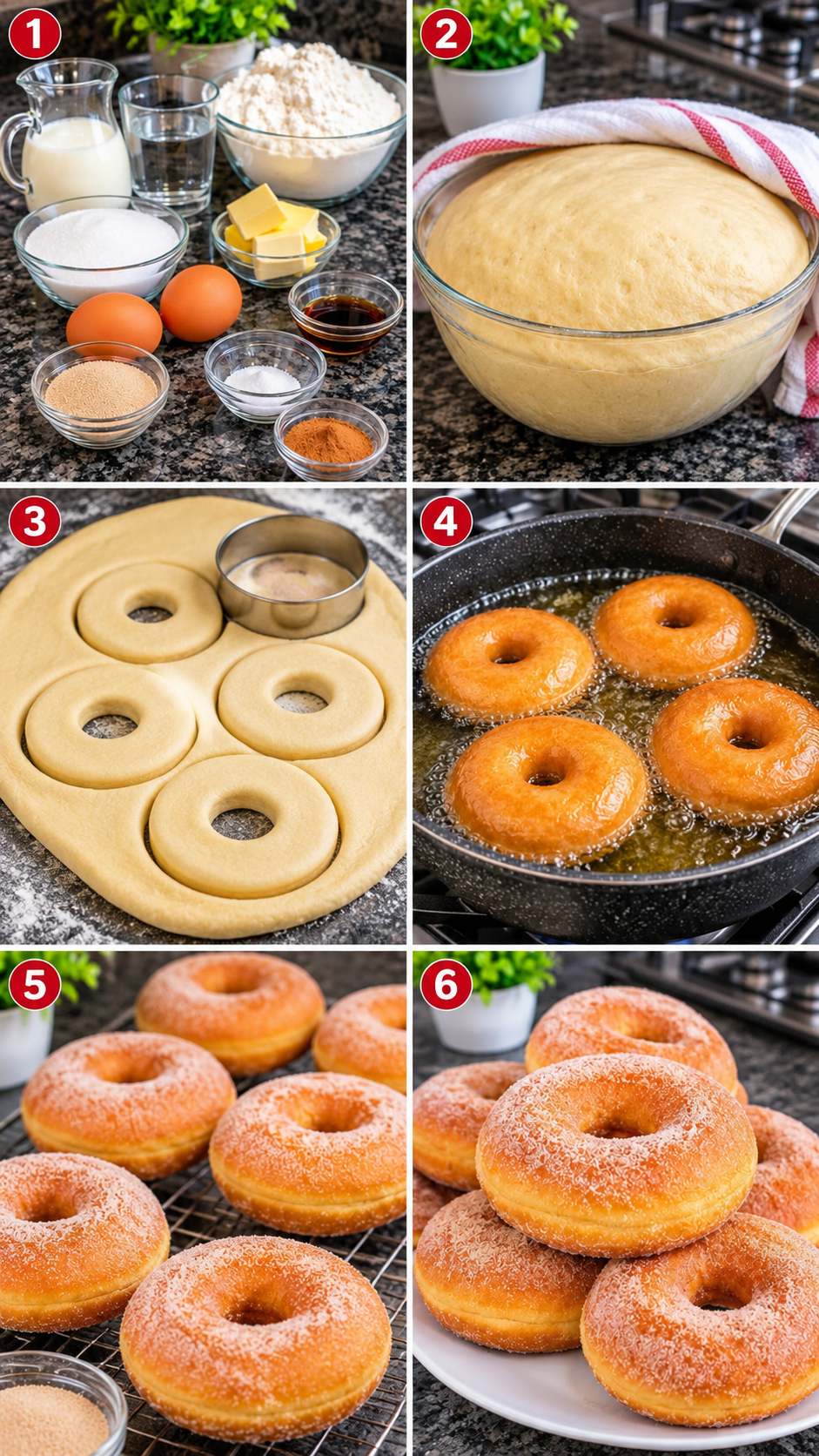
These homemade sugar-coated donuts are everything a perfect donut should be! They have a soft, pillowy interior, a beautiful golden-brown exterior, and a delicious coating of granulated sugar. Made with simple pantry ingredients, this classic homemade donut recipe is perfect for breakfast, brunch, afternoon snacks, or whenever you’re craving something sweet.
The dough is enriched with milk, eggs, butter, and vanilla, giving the donuts their wonderful flavor and tender texture. Once fried until golden, each donut is coated in sugar for that irresistible bakery-style finish.
Preparation Time: 25 minutes
Rising Time: 1 hour 30 minutes to 2 hours
Cooking Time: 20 minutes
Total Time: Approximately 2 hours 30 minutes
Yield: 12–14 donuts
Ingredients
For the Donut Dough
- 4 cups (500 g) all-purpose flour, plus a little extra for dusting
- 1 cup (240 ml) warm milk (about 105–110°F / 40–43°C)
- 2¼ teaspoons (7 g) active dry yeast (1 packet)
- ⅓ cup (65 g) granulated sugar
- 2 large eggs, at room temperature
- ¼ cup (56 g) unsalted butter, melted and slightly cooled
- 1 teaspoon pure vanilla extract
- ½ teaspoon salt
For Frying
- 4–6 cups vegetable oil, or enough for deep frying
For the Sugar Coating
- 1 cup (200 g) granulated sugar
- ½ teaspoon ground cinnamon (optional)
Instructions
Step 1: Activate the Yeast
Pour the warm milk into a small bowl. Make sure the milk is warm but not hot, as excessive heat can kill the yeast.
Add the active dry yeast and 1 tablespoon of the measured sugar. Stir gently and let the mixture sit for 5–10 minutes.
The mixture should become foamy on top, which indicates that the yeast is active and ready to use.
Step 2: Prepare the Wet Ingredients
In a large mixing bowl, whisk together the eggs and the remaining granulated sugar until combined.
Add the melted butter, vanilla extract, and activated yeast mixture.
Whisk everything together until the mixture looks smooth and evenly combined.
Step 3: Make the Dough
In a separate bowl, combine the all-purpose flour and salt.
Gradually add the flour mixture to the wet ingredients, stirring with a wooden spoon or dough hook.
Continue mixing until a soft, slightly sticky dough begins to form.
If the dough feels excessively wet, add a little flour, one tablespoon at a time. Avoid adding too much flour because this can make the donuts dense instead of soft and fluffy.
Step 4: Knead the Dough
Transfer the dough to a lightly floured work surface.
Knead by hand for approximately 8–10 minutes, or use a stand mixer fitted with a dough hook for about 5–7 minutes on medium-low speed.
The dough should become smooth, elastic, and slightly tacky.
To test it, gently stretch a small piece of dough. It should stretch without tearing immediately.
Step 5: First Rise
Lightly grease a large bowl with a little vegetable oil or butter.
Place the dough inside and turn it once to coat the surface lightly.
Cover the bowl with plastic wrap or a clean kitchen towel.
Place it in a warm, draft-free area and let it rise for approximately 1–1½ hours, or until doubled in size.
The rising time may vary depending on the temperature of your kitchen.
Step 6: Roll Out the Dough
Once the dough has doubled in size, gently press it down to release excess air.
Transfer it to a lightly floured work surface.
Using a rolling pin, roll the dough into an even layer approximately ½ inch (1.25 cm) thick.
Try to maintain an even thickness so that all the donuts cook evenly.
Step 7: Cut the Donuts
Use a round donut cutter to cut out donut shapes.
If you don’t have a donut cutter, use a large round cookie cutter or drinking glass for the outer circle and a smaller cutter for the center hole.
Carefully remove the donut rings and place them on parchment-lined baking sheets.
Gather the remaining dough scraps, gently bring them together, and roll them out again to cut additional donuts.
Avoid repeatedly kneading the scraps, as this can make the donuts tougher.
Step 8: Second Rise
Cover the shaped donuts loosely with a clean kitchen towel.
Let them rest for approximately 30–45 minutes, or until they look noticeably puffy and slightly increased in size.
This second rise is important because it helps create a light, airy texture after frying.
Step 9: Heat the Oil
Pour vegetable oil into a deep, heavy-bottomed pot or deep fryer.
Heat the oil to 350°F (175°C).
Use a kitchen thermometer to monitor the temperature.
Maintaining the correct temperature is essential. If the oil is too hot, the donuts may brown too quickly while remaining undercooked inside. If it is too cool, they may absorb excess oil and become greasy.
Step 10: Fry the Donuts
Carefully place 2–3 donuts into the hot oil at a time, depending on the size of your pot.
Do not overcrowd the pan because this can lower the oil temperature.
Fry each donut for approximately 1–2 minutes per side, until beautifully golden brown.
Use a slotted spoon or kitchen tongs to turn them gently.
The donuts should develop an even golden color and puff up as they cook.
Transfer the fried donuts to a wire rack or a paper towel-lined tray to drain excess oil.
Repeat with the remaining donuts, allowing the oil to return to the correct temperature between batches.
Step 11: Prepare the Sugar Coating
Place the granulated sugar in a shallow bowl.
If you enjoy a little extra warmth and flavor, add ½ teaspoon of ground cinnamon and mix well.
The cinnamon is optional, so you can keep the coating simple with plain sugar for a traditional homemade donut flavor.
Step 12: Coat the Donuts
Allow the donuts to cool slightly until they are warm but still have a little surface warmth.
Place each donut into the sugar mixture and turn it gently until all sides are evenly coated.
For an extra generous coating, gently roll each donut in the sugar a second time.
Transfer the finished donuts to a serving plate.
Step 13: Serve and Enjoy!
Arrange the homemade sugar donuts on a beautiful serving plate.
They should have a gorgeous golden-brown exterior, a soft and fluffy interior, and a delicate coating of sweet sugar.
Serve them warm with coffee, tea, hot chocolate, or a cold glass of milk.
Enjoy every delicious bite!
Helpful Tips for Perfect Homemade Donuts
1. Use warm milk, not hot milk.
The ideal temperature is approximately 105–110°F (40–43°C). Very hot milk can damage the yeast.
2. Don’t add too much flour.
A slightly sticky, soft dough produces lighter and fluffier donuts.
3. Give the dough enough time to rise.
Both rising stages help develop the soft, airy texture that makes homemade donuts so delicious.
4. Maintain the correct frying temperature.
Keep the oil around 350°F (175°C) for an evenly cooked, golden exterior.
5. Fry in small batches.
Adding too many donuts at once can lower the oil temperature.
6. Coat while slightly warm.
The sugar adheres more easily when the donuts are still slightly warm.
7. Don’t waste the donut holes.
Fry the small dough centers separately to make delicious little donut bites.
Storage Instructions
- Room temperature: Store cooled donuts in an airtight container for up to 2 days.
- Refrigeration: Refrigeration is generally not recommended because it can make the donuts dry and firm.
- Freezing: Freeze uncoated donuts in a freezer-safe container for up to 2 months.
- Reheating: Warm briefly in the microwave for approximately 8–10 seconds. Add fresh sugar coating if needed.
Final Result
Soft, fluffy, golden homemade sugar donuts made from scratch with simple ingredients!
This easy homemade recipe brings the comforting taste of a classic American bakery right into your kitchen. Perfect for sharing with family and friends, these donuts are delicious served fresh and warm.
Enjoy your homemade donuts! ❤️🍩