
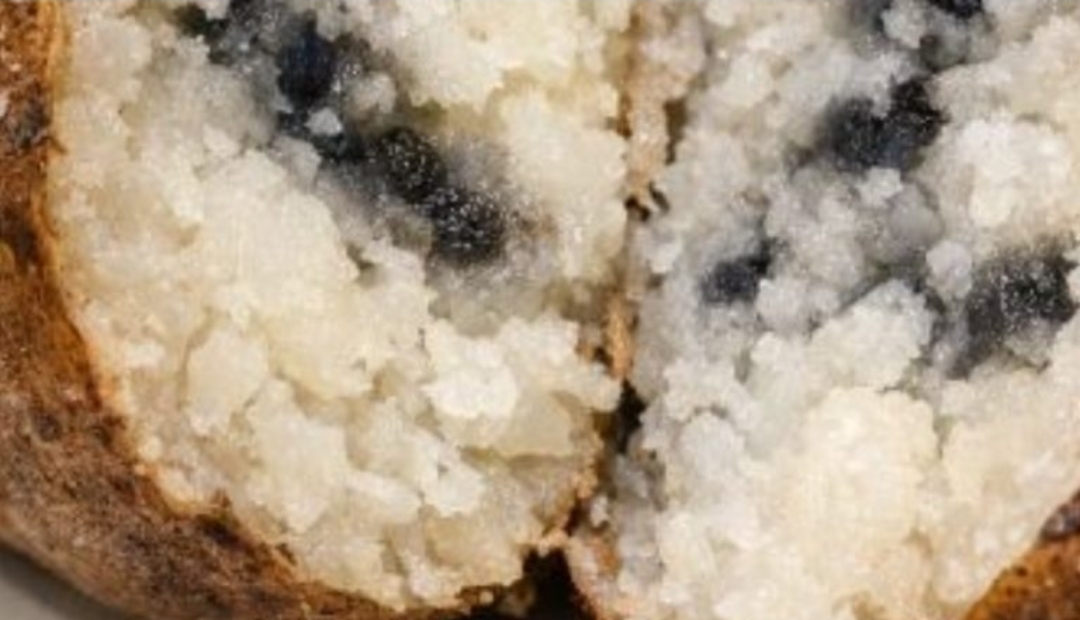
Imagine preparing a comforting meal by baking a large russet potato, one of those versatile ingredients that can transform into a myriad of delicious dishes. You’ve spent time ensuring it’s perfectly cooked, eagerly anticipating the fluffy, steamy interior. However, upon slicing it open, you’re met with unexpected dark grey streaks and spots within the creamy flesh. This sight can be quite disconcerting, raising valid concerns about whether this potato is safe to eat.
Such discolorations can be concerning, especially when you’re not sure if they’re indicative of spoilage or something harmless. Understanding the causes of these imperfections and learning how to handle them can help ensure you make the right decision about your meal. In this article, we’ll explore what these dark spots mean, how they occur, and whether or not you should be worried about consuming the potato.
1. What Those Dark Grey Streaks and Spots in a Russet Potato Actually Are
The dark grey streaks and spots you see inside your potato are often referred to as ‘internal black spots.’ These are a type of bruising that occurs when the potato has been compressed or handled roughly. Despite their alarming appearance, they are quite common and usually harmless. This internal bruising doesn’t affect the overall safety of the potato, but it can affect its aesthetic and possibly its flavor.
These spots are caused by cells in the potato breaking down and oxidizing, leading to the dark coloration. Typically, these spots are less than a centimeter in diameter and can vary in intensity, from light grey to almost black. The discoloration is usually limited to certain areas and doesn’t spread throughout the entire potato.
2. How Internal Black Spot Bruising Happens Before the Potato Reaches Your Kitchen
Internal black spots are primarily a result of mechanical damage to the potato. This damage can occur at several stages, including during harvesting, transportation, and storage. Potatoes are delicate despite their robust appearance, and rough handling can lead to bruising. When potatoes are dropped or jostled, the impact can cause the cells inside the potato to rupture, leading to the formation of black spots.
Temperature fluctuations can also play a role in the development of these spots. For example, if potatoes are stored at temperatures that are too low, it can increase their susceptibility to bruising. Additionally, potatoes stored in environments with high humidity can also develop these internal blemishes more readily.
3. When Discoloration Is Harmless Bruising Versus a Sign of Rot or Disease
While internal black spots are generally harmless, it’s crucial to differentiate them from signs of rot or disease. Harmless bruising appears as localized dark spots within an otherwise healthy-looking potato. The surrounding flesh should be firm and free from any slimy texture or foul odors.
On the other hand, if the potato has a strong, unpleasant smell, a mushy texture, or is accompanied by mold, it could be a sign of rot. Additionally, diseases like late blight can cause discoloration, but these typically affect the skin and extend deeper into the flesh in a more widespread manner. It’s essential to assess these factors carefully to determine whether the potato should still be consumed.
4. Simple Visual and Smell Checks to Decide If Your Potato Is Still Safe
Performing a simple visual and smell check can help you decide whether your discolored potato is safe to eat. First, inspect the potato for any signs of mold or rot on the skin. A healthy potato should have a firm texture and an earthy smell. Cut open the potato and examine the flesh. If the dark spots are isolated and the rest of the potato looks healthy, it is likely safe to consume after removing the affected areas.
Smell is another important indicator. A fresh potato should have a neutral, earthy scent. If you detect any sour or rotten odors, it’s best to discard the potato. These checks are quick and can save you from consuming a potentially unsafe product.
5. How Much of the Discolored Flesh You Need to Cut Away
When dealing with discolored flesh, it’s generally advisable to cut away the affected areas generously. Use a sharp knife to remove the grey or black spots, ensuring you cut into some of the healthy-looking flesh around it to ensure no bruising remains. Usually, removing about an inch around the discolored area should suffice.
After cutting away the blemishes, inspect the remaining potato for any further signs of discoloration. If the rest of the potato appears normal, it should be safe to cook and eat. However, if dark spots are pervasive throughout the potato, it might be better to discard it altogether.
6. Texture and Taste: What to Expect If You Eat a Bruised Potato
Bruised potatoes with internal black spots may have a slightly altered texture and taste, although they are generally still edible. The affected areas can become slightly softer and may have a different mouthfeel compared to the rest of the potato. The flavor might also be slightly bitter in the discolored sections.
When cooked, the remaining healthy parts of the potato should taste as expected, with a fluffy texture and mild flavor. If you remove the bruised sections thoroughly, you can still enjoy your potato dish without any noticeable difference in taste or texture.
7. Health Risks: Is There Any Real Danger From Internal Black Spots?
The good news is that internal black spots, while unsightly, do not pose any significant health risks. These spots are purely a cosmetic issue and do not affect the potato’s safety when consumed. They are not caused by bacteria or fungi, so they do not carry the risk of foodborne illnesses.
However, it’s always important to ensure that the potato is not showing signs of rot or mold, as these can lead to health issues if ingested. As long as you follow the visual and smell checks and remove the affected areas, eating a potato with internal black spots is safe.
8. When to Toss the Potato Instead of Trying to Salvage It
There are certain situations where it’s best to discard a potato rather than attempt to salvage it. If the potato has a pervasive foul odor, extensive mold growth, or a mushy texture, it’s a sign of advanced spoilage. These conditions indicate that the potato is no longer safe to eat.
Additionally, if the discoloration is widespread and removing the affected areas would leave very little usable potato, it might be more practical to start with a fresh one. It’s always better to err on the side of caution when it comes to food safety.
9. Smart Shopping Tips to Avoid Potatoes Prone to Internal Bruising
When shopping for potatoes, choose ones that are firm to the touch and free from visible blemishes or cuts. Avoid potatoes that have green patches, as this indicates exposure to light and can lead to the development of solanine, a toxic compound.
Opt for potatoes that are stored in a cool, dark place at the store, as this reduces the risk of bruising and spoilage. Buying from reputable sources that handle their produce with care can also minimize the likelihood of purchasing bruised potatoes.
10. Storage and Handling Hacks to Prevent Future Black Spots at Home
Proper storage and careful handling at home can help prevent the development of black spots in potatoes. Store potatoes in a cool, dark, and well-ventilated place, such as a pantry or cellar. Avoid storing them in the refrigerator, as cold temperatures can lead to starch conversion and increased susceptibility to bruising.
Handle potatoes gently to avoid bruising. Avoid dropping them or stacking them too high, as this can cause pressure damage. Regularly check your stored potatoes for any signs of spoilage and use older potatoes first to minimize waste.
11. What This Means for Tonight’s Dinner—and How to Rescue Your Baked Potato
Discovering dark streaks in your baked potato doesn’t mean you have to scrap your dinner plans. By removing the discolored areas and ensuring the remaining potato is still firm and smells fresh, you can salvage your meal.
Consider adding a flavorful topping or sauce to your baked potato to enhance its taste. Sour cream, chives, cheese, or a sprinkle of herbs can mask any slight bitterness from the bruised areas. With some creativity and a bit of preparation, you can still enjoy a delicious and satisfying meal.