
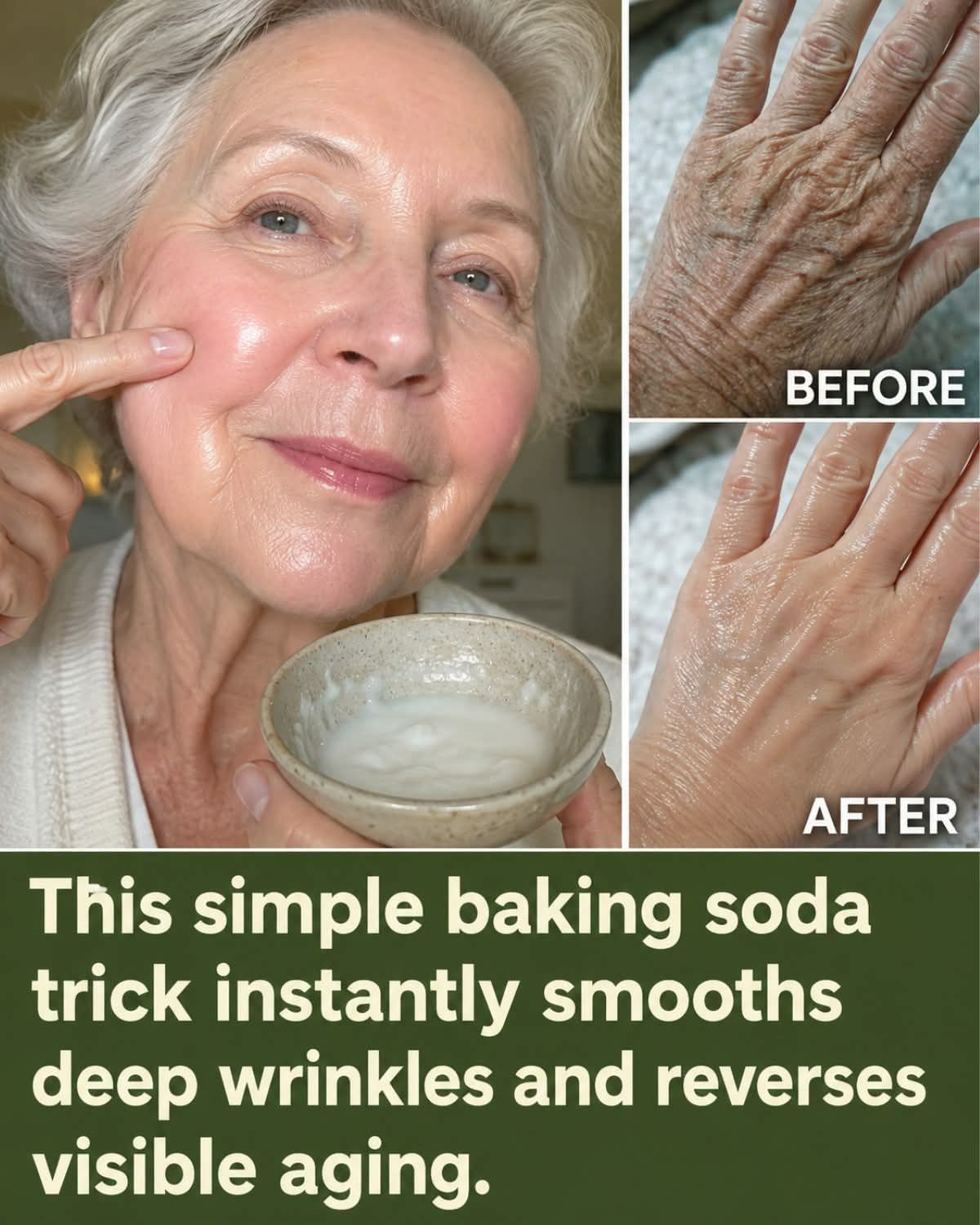
The white powder that can sand down dull, crepey skin
Baking soda is the blunt little kitchen powder that can strip away the film sitting on top of mature skin, including the dullness, rough patches, and that tired, lined look that seems to deepen every morning. Used the wrong way, it tears at the skin barrier. Used with precision, it acts like a tiny resurfacing sweep that clears away the dead-cell crust hiding fresher skin underneath.
That’s why so many women wake up, stare at the mirror, and feel the same sick little drop in the stomach: the lines around the eyes look sharper, the cheeks look flatter, and the face feels less like skin and more like dry paper stretched over bone. By midday, makeup catches in the cracks. By evening, the whole surface feels thirsty and tired.
The beauty industry loves to sell you another jar, another serum, another promise in a glass bottle. What it rarely shouts is that the skin already knows how to renew itself — it just gets buried under buildup, slowed turnover, and a barrier that’s been beaten down by years of sun, soap, and over-scrubbing.

What baking soda does is not magic. It forces the surface to shed what it has been clinging to.
Why mature skin starts looking trapped
Think of aging skin like a window that hasn’t been cleaned in months. The glass is still there, but every layer of dust, grease, and rain spot makes the view look dimmer than it really is. Dead cells do the same thing on the face: they pile up, scatter light, and make skin look uneven, rough, and older than it should.
Baking soda brings a coarse, alkaline push that loosens some of that surface debris. The first thing people notice is not some fantasy “youth reset” — it’s that the skin feels less bumpy, less coated, less like it’s wearing yesterday’s residue.

And when that buildup starts moving, the face changes in a way a thick cream can’t fake. Light lands differently. Foundation stops snagging. The skin looks like it has been aired out.
That’s the ugly contrast: when exfoliation is missing, the face becomes a storage shelf for dead cells. When it’s done carefully, the surface starts to clear and the skin finally shows what’s underneath.
Why women over 60 notice the shift first
Women with mature skin often feel the change in the mirror before anyone else sees it. The cheeks can look drier by breakfast, the jawline can feel slack by afternoon, and the fine lines around the mouth can seem etched in from the moment you wake up.

Here’s the body picture: the outer layer slows down, old cells stay parked too long, and the face loses that fresh, even finish. Baking soda works like a stiff broom across a tiled floor after a long winter — not delicately, not softly, but with enough force to lift what’s stuck.
Used sparingly, it can leave the skin feeling smoother, cleaner, and more responsive to moisturizer. That’s the payoff: creams stop sitting on top of dead buildup and start meeting actual skin.
The $100-billion skincare machine barely whispers about that part, because a pantry staple does not feed an empire. You can’t slap a luxury label on a spoonful of baking soda and charge eighty-nine dollars for the privilege.

The hands tell the truth faster than the face
Look at the back of the hands and the story gets louder. Thin skin, sun spots, rough texture, and little creases that catch every bit of dryness — that’s where age likes to announce itself without permission.
Baking soda can help sweep away the dull crust that makes hands look older than the rest of the body. It’s like wiping grime off a brass doorknob: the shape was always there, but the shine was buried under years of use.
After a few uses, the difference people notice is often tactile before it is visual. The skin feels less chalky. Lotion spreads better. Rings slide on without snagging against that papery roughness.
That’s the part nobody tells you: the cheapest fix often gets the least airtime, not because it fails, but because it doesn’t pay anybody’s rent.
The hidden mechanism behind the smoother look
This is the real engine: the Surface Sweep Reset. Baking soda helps break up the dead-cell pileup that blocks light, traps dryness, and makes mature skin look blunt and tired.
Picture a kitchen sink drain packed with greasy residue. Water still tries to move through, but it crawls. The face works the same way when surface buildup chokes the skin’s clean finish — every cream, every serum, every drop of moisture has to fight through the mess first.
Once that top layer gets cleared, skin can look brighter without looking shiny, smoother without looking fake, and fresher without needing a heavy cosmetic cover-up. Over time, the pattern gets clearer: the face looks less congested, the texture feels less stubborn, and the morning mirror stops delivering the same punch to the gut.
The shift is not dramatic in the movie-trailer sense. It is quieter, cleaner, and far more believable — the kind of change you feel with your fingertips before you trust it with your eyes.
How the right pairing changes everything
Alone, baking soda can be too aggressive for fragile skin. Paired with the right softening ingredient, it becomes a different animal entirely.
That’s why people mix it with things like glycerin, honey, or avocado oil: the baking soda lifts, while the companion ingredient cushions the blow and helps the surface keep its comfort instead of collapsing into tight, itchy dryness. Think of it like scrubbing a stained pan with a little water instead of attacking it with dry steel wool.
When that balance is right, the after-picture is easy to recognize. Skin feels less like old parchment and more like something that can actually hold moisture. Makeup sits better. The face looks rested instead of ravaged.
And yes, that difference matters more than another empty promise in a shiny bottle.
One wrong habit can wreck the whole effect
Most people ruin the result by treating baking soda like a daily face wash. That turns a resurfacing trick into a barrier attack, and the skin answers back with redness, tightness, and a raw, over-polished look that screams irritation.
Use it too often, and you don’t get glow — you get a face that feels stripped, as if the top layer has been scrubbed down to the bone. The smoother finish disappears, and the skin starts begging for repair instead of renewal.
The smarter move is simple: keep it occasional, pair it well, and never pile it onto already irritated skin. That one decision changes whether you get a cleaner surface or a miserable flare-up.
There’s a timing secret that matters even more than the paste itself, and it starts with what you put on the skin right after the rinse.
This article is for informational purposes only and does not replace professional medical advice. Please consult your healthcare provider for personalized guidance.