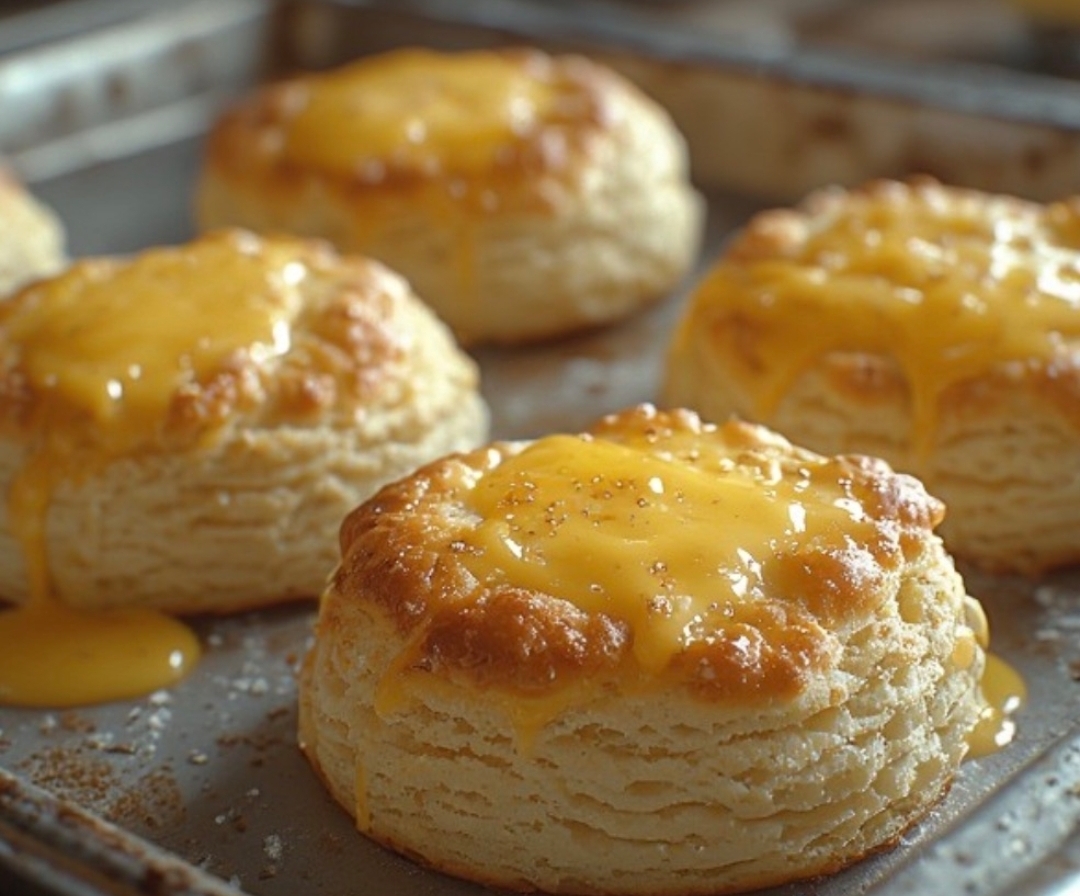
Southern 3-Ingredient Drop BiscuitsThe drop biscuit is the most democratic form of the biscuit — no cold butter to cut in, no rolling pin required, no circular cutter to press through carefully layered dough. You mix a soft, sticky dough in a single bowl, drop heaping spoonfuls onto a baking sheet, and slide it into a hot oven. Fifteen minutes later you have biscuits with golden, slightly craggy tops, fluffy steaming interiors, and a buttery crust that holds up to being split and loaded with jam, swiped through sausage gravy, or simply eaten out of hand with an extra pat of butter melting into the crumb. Three ingredients — self-rising flour, whole buttermilk, and salted butter — and the technique is genuinely as simple as the ingredient count suggests.Drop biscuits have a long tradition in Southern cooking, where they’re valued for their speed and lack of fuss relative to rolled and cut biscuits. The drop method produces a slightly different character from the laminated, cut variety: the tops are more textured and rustic, the interior is a bit more tender and less flaky, and the overall quality is warm and comforting rather than technically refined. These are biscuits for Sunday mornings and weeknight dinners, for serving alongside soup and gravy and eggs, for the kind of cooking where the goal is excellent, satisfying food prepared quickly and without complicated technique.Why Three Ingredients Is All You NeedSelf-rising flour is the key to the recipe’s simplicity. It’s all-purpose flour with baking powder and salt already incorporated at the mill — typically one tablespoon of baking powder and half a teaspoon of salt per cup of flour, calibrated for biscuit and quick bread ratios. Using self-rising flour means the leavening and seasoning are already present in the correct proportions without measuring anything separately. Southern cooks have used self-rising flour for biscuits for generations precisely because it eliminates one category of variables from the process.Buttermilk does two distinct jobs: it provides the liquid the dough needs to come together, and its acidity reacts with the baking powder in the self-rising flour to produce carbon dioxide — the bubbles that make the biscuits rise and become airy rather than dense. Whole buttermilk (full-fat) produces the best results: its fat content contributes tenderness and a rich, slightly tangy flavor that’s characteristic of good Southern biscuits. The tang of the buttermilk also provides a pleasant flavor contrast to the butter’s richness in the finished biscuit.The butter serves multiple functions. Some goes into the dough with the buttermilk, contributing fat that produces tenderness; some is brushed over the tops before baking, producing the golden, slightly crisp outer crust; and the final brush of melted butter straight from the oven produces the glistening, rich-smelling finish that makes hot biscuits so irresistible. The melted-butter method rather than cut-in cold butter is what makes drop biscuits fast and foolproof — no cold-butter technique to master, no risk of over-developing the gluten by working the fat in too long.Why You’ll Love This RecipeThe speed is the most immediate appeal. From bowl to oven to table in under 30 minutes — including the five-minute dough rest and 12 to 15 minutes of baking — these are biscuits that can go from idea to finished plate faster than almost any other from-scratch bread. There’s no dough-chilling time, no waiting for butter to come to the right temperature, no kneading, no rolling. The bowl and spoon method is genuinely accessible to anyone regardless of baking experience, and the results are reliably good from the first attempt.The flavor is the second appeal. Good drop biscuits made with whole buttermilk and real butter have a tangy, rich, warmly savory character that pairs with an enormous range of foods — savory and sweet alike. They’re equally at home beside scrambled eggs and bacon at breakfast, split and covered with sausage gravy at brunch, served alongside a pot of soup or beans at dinner, or topped with sliced strawberries and whipped cream for a spring shortcake. Few baked goods are as genuinely versatile.Ingredient NotesSelf-rising flour — two cups, loosely spooned and leveled — is the foundation of the recipe. The key preparation note is how you measure it: spoon the flour lightly into the measuring cup rather than scooping directly from the bag, which compresses the flour and produces significantly more than two cups by weight, leading to dense, dry biscuits. Spoon it in, let it mound slightly above the rim, then sweep the back of a straight edge across the top to level. White Lily is the brand most associated with Southern biscuit baking — it’s made from a softer, lower-protein winter wheat that produces particularly tender, fine-textured biscuits. King Arthur and Gold Medal self-rising flour are also excellent and more widely available nationally. If self-rising flour isn’t available in your area, make your own by whisking together two cups of all-purpose flour with one tablespoon of baking powder and half a teaspoon of fine salt. Measure the all-purpose flour first, then add the leavening and salt — do not substitute baking soda for baking powder, as the proportions and chemical reactions are different.Whole buttermilk — 1½ cups, well-shaken before measuring — is the liquid component and the key to the biscuits’ tender, slightly tangy character. Whole buttermilk (full-fat) is the correct choice: its fat content contributes tenderness that reduced-fat or fat-free buttermilk cannot provide. Shake the carton vigorously before opening to re-incorporate the settled cream and ensure consistent fat distribution throughout the liquid. If whole buttermilk isn’t available, full-fat cultured buttermilk of any kind works; avoid low-fat buttermilk for this recipe. A reliable substitute for buttermilk is whole milk with a tablespoon of white vinegar or lemon juice added — stir and let it sit for 5 minutes until it curdles slightly, then use in the same quantity. This soured milk substitute works well in a pinch but produces a slightly less complex, less tangy flavor than real cultured buttermilk.
3-Ingredient Drop Biscuits